How to Open an International Bank Account Online (2026)

An international bank account used to mean one thing: an offshore account in Jersey or the Isle of Man, opened by post, aimed at people with money already sitting still. Today the same phrase also describes an app you finish signing up for before your coffee goes cold.
Both products come back for the same search, and they are not close substitutes. One asks for a five figure balance before it will talk to you. The other asks for a passport photo and nothing else.
This guide covers how to open an international bank account online, what documents you need, what each option really costs, who gets turned down, and the one protection the online accounts do not give you. It uses US dollar and pound examples throughout, and the mechanics apply wherever you are opening from.
For most people the fastest route in is a Wise multi-currency account, which is free to register and gives you local account details in 20 currencies. The rest of this guide explains when that is the right answer and when it is not.
How to Open an International Bank Account Online
You open an international bank account online in five steps: choose a provider that accepts your country of residence, register with an email address, upload a photo ID, confirm your home address and tax residency, then switch on the currency account details you need. With a digital provider the whole sequence takes about ten minutes and costs nothing to start.
Traditional banks run the same checks, but they run them slowly and they add a wealth test on top. That difference in speed is the main reason most people now start online rather than walking into a branch.
The Five Steps, Whichever Provider You Pick
The order barely changes between providers, because every one of them is answering the same regulatory questions: who are you, where do you live, and where did the money come from. What changes is how much evidence each one demands before it says yes.
- 1. Check eligibility first: every provider publishes a list of countries it accepts residents from, and it is shorter than you expect
- 2. Register: an email address and a password, no documents yet
- 3. Verify your identity: a passport or national ID photographed with your phone, usually with a short selfie video
- 4. Confirm address and tax residency: a recent utility bill or bank statement, plus the country you are tax resident in and your tax number
- 5. Activate account details: for a multi-currency account you choose which currencies you want local details for, then fund the balance
Step one is the step people skip, and it is the one that decides everything. Residency, not nationality, is what a provider checks, so a British passport holder living outside the accepted list gets rejected exactly as fast as anyone else.
What You Need Before You Start
Getting the documents together first turns a three day application into a ten minute one. Most rejections at the digital providers are not judgments about you, they are a document that did not match the name or the address on the form.
- A valid passport or national ID card, not expired, photographed flat with all four corners visible
- A proof of address dated within the last three months, showing your name and address exactly as you typed them
- Your tax identification number for the country you are tax resident in
- For a business account, the incorporation certificate, ownership structure and details of every beneficial owner
If you are opening in a specific country rather than opening a multi-currency account, the document list gets longer and more local. Spain, for example, expects a foreigner identification number for most accounts, which is why opening a bank account in Spain as a non-resident takes preparation that a digital account does not.
See What It Costs to Fund Your New Account
Opening the account is the easy half. Getting money into it from wherever your money is now is where the cost actually sits, and the difference between routes on the same transfer runs into hundreds of dollars. Price that before you open anything.

What an International Bank Account Actually Is
There is no single product called an international bank account. The phrase covers two different things: an offshore bank account held in a jurisdiction you do not live in, and a multi-currency account that holds several currencies and gives you local details in each. They solve different problems and they are priced completely differently.
Knowing which of the two you are looking at is the whole decision, because the offshore account is a wealth product and the multi-currency account is a utility.
The Offshore Account, and the Wealth Requirement Behind It
HSBC Expat is the clearest example and it publishes its criteria openly. The account is provided by HSBC Bank plc, Jersey branch, and to open one you need investments or savings of £75,000, or you need to already be an HSBC Premier customer with at least £10,000 to save or invest. You also have to live in an eligible country.
What you get for that is a real bank account in GBP, EUR or USD, with fixed term deposits available in 19 currencies and a relationship manager attached. What you also get is the Jersey Bank Depositors Compensation Scheme, which protects eligible deposits up to £50,000.
This is a genuine offshore bank account in the traditional sense, and it is simply not available to someone whose problem is holding two currencies and getting paid from abroad on a 3,000 USD invoice.
The Multi-Currency Account, and What It Replaces
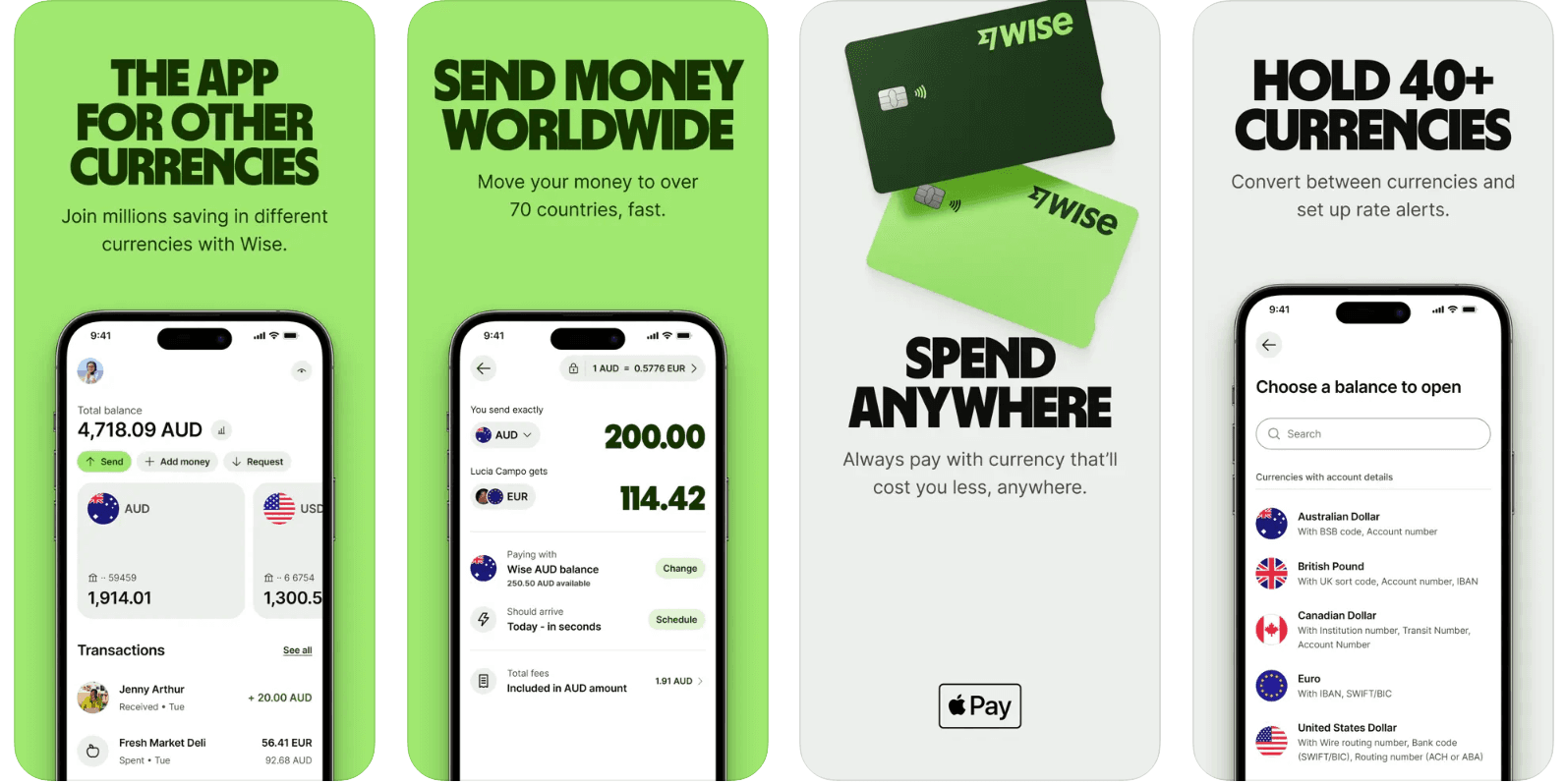
A multi-currency account holds balances in many currencies at once and issues you local account details in several of them, so money arriving from another country lands as a domestic payment rather than an international one. Wise holds 40 currencies and gives personal customers account details in 20.
That second part is what makes it useful. With a US routing number and account number, a euro IBAN and a UK sort code all attached to the same balance, you are reachable in three payment systems without holding three separate bank accounts. It is the same reason people open a euro account in the US or a USD bank account in the UK, except one account covers all of them.
The trade is protection: no FSCS, no FDIC and no £50,000 Jersey scheme sitting behind the balance, which the next sections cover in full.
Which of the Two International Bank Accounts People Actually Mean
When people search for international bank accounts they are almost never asking about Jersey. They are asking how to get paid in another currency, how to hold money while moving country, or how to stop their bank charging them for every incoming payment. That is the multi-currency answer, not the offshore one.
What you are comparing | Offshore bank account | Multi-currency account |
|---|---|---|
Example | HSBC Expat, Jersey | Wise, Revolut, N26 |
Entry requirement | £75,000 in savings or investments | None |
Time to open | Days to weeks | About 10 minutes |
Currencies | GBP, EUR, USD current accounts | Up to 40 held at once |
Local account details | Jersey only | Up to 20 currencies |
Deposit protection | £50,000, Jersey scheme | None, safeguarding instead |
Best for | Holding wealth outside your home country | Getting paid, spending and moving money |

Can You Open an International Bank Account Online?
Yes, and for a multi-currency account it is now the only way most people do it. What you cannot do is open one from anywhere. Every provider publishes a list of countries whose residents it accepts, and that list, not your nationality or your passport, is what decides whether your application goes through.
Residency Decides Where, Not Nationality
Wise lets you hold money in your account if you live in one of more than 100 listed countries and territories. Revolut is narrower: you can open a personal account if you are 18 or over and live in the European Economic Area, the UK, the US, Australia, Brazil, Japan, New Zealand, Singapore, Switzerland or a small set of listed overseas territories.
That gap matters more than any fee comparison. If you live outside the app banks' footprint, the cheapest account in the world is irrelevant, because you will not be allowed to open it. Check the residency list before you compare anything else.
It also cuts the other way. Someone living in Australia who wants a US account will find that opening a US bank account from overseas is far harder than getting USD account details through a multi-currency provider, and the same is true in reverse for opening an Australian account from abroad.
What Verification Actually Involves
Digital verification is automated, which is why it is fast and also why it is unforgiving. A system is comparing the name on your ID to the name on your form to the name on your address document, character by character. It has no judgment and no benefit of the doubt, so one character out of place is enough to stop it.
Most providers verify in minutes when the documents are clean. When something does not match, the case goes to a human queue and the wait becomes days. Middle names, accented characters and an address written in a different order are the three things that push an application into that queue.
Why International Bank Account Applications Get Rejected
Rejections cluster into five causes, and most of them are fixable before you apply rather than after. The most common is a proof of address that is out of date, in someone else's name, or from a provider the bank does not accept.
- Address mismatch: the document says Flat 3 and the form says Apartment 3
- Document age: most providers want something dated within three months
- Unsupported country of residence: the single most common hard rejection, and it is not appealable
- Unclear source of funds: large first deposits with no explanation trigger a manual review
- Sanctions or high risk jurisdiction screening: automatic and rarely explained in the rejection message
Documents Required to Open an International Bank Account
Every provider asks for the same three things: who you are, where you live, and where you pay tax. A traditional bank adds a fourth, where the money came from, and a business account adds ownership. Getting all of them ready before you start is the difference between a ten minute application and a three week one.
Proof of Identity
A passport is the safest document because it is recognised everywhere and it carries a machine readable zone that automated systems parse cleanly. A national ID card works across the EEA. A driving licence is accepted by some providers and refused by others, so it is a poor first choice.
Photograph it flat, in daylight, with all four corners in frame and no glare across the photo page. Roughly half of failed identity checks at digital providers are image quality rather than the document itself.
Proof of Address, the Step That Fails Most Often
This is where most failed applications die. The document has to be recent, usually within three months, and it has to carry your name and your address in the same form you typed them. A bank statement, a utility bill, a council tax bill or a government letter all qualify at most providers.
Mobile phone bills are refused surprisingly often because they are considered easy to alter. If you have just moved country and have no local document yet, this is the specific reason a multi-currency account is easier than a local one: it verifies against your current address wherever that is, not against an address in the country whose currency you want.
Tax Residency, and Why They Ask
Every account application now asks which country you are tax resident in and for your tax identification number. That is not the provider being nosy. Under the Common Reporting Standard, financial institutions collect this so they can report the account to your tax authority automatically.
Answer it accurately. Tax residency is not the same as citizenship and it is not always the same as where you live, and getting it wrong on an account opening form creates a problem that surfaces years later rather than immediately.
Extra Documents for a Business or Student Account
An international business bank account needs the certificate of incorporation, the ownership structure showing every beneficial owner above the reporting threshold, proof of the business address, and usually a description of what the business actually does and which countries it trades with.
A student account is lighter but not automatic. Providers typically want an enrolment letter alongside the standard identity and address documents. If the account is going to receive tuition or maintenance payments from home, it is worth reading how receiving money from abroad is charged before choosing where those payments land.
The Best International Bank Account Options in 2026
The best international bank account depends on one question: are you storing money or moving it? For moving, spending and getting paid, a multi-currency account wins on every measure. For holding a large balance somewhere protected, a real bank still wins, and you should expect to meet its entry requirements.
These are the international banking accounts that cover almost everyone, with what each one is actually good at.
Wise, the Default for Most People
 Wise9.5
Wise is free to register, holds 40 currencies and gives personal customers account details in 20 of them. There is no monthly fee, no minimum balance and no opening charge. The card costs 9 USD once, and ATM withdrawals up to 250 USD per calendar month carry no Wise fee, after which a 1.95 USD plus 1.95% charge applies to each withdrawal.
What makes it the default is not the pricing alone, it is that conversions run at the mid-market rate with the fee shown separately, so you can see the whole cost before you confirm. That is the opposite of how a bank prices the same conversion.
Its limit is equally clear. Wise states plainly that it is a money service business registered with FinCEN, not an FDIC insured bank, so it is the wrong place for a balance you cannot afford to have complicated.

HSBC Expat, If You Have the Balance
The traditional offshore option, provided by HSBC Bank plc, Jersey branch. Accounts come in GBP, EUR or USD, with fixed term deposits available in 19 currencies. There is no monthly fee as long as you meet the eligibility criteria, and an underfunding fee if you do not.
You qualify with investments or savings of £75,000, or by being an HSBC Premier customer with at least £10,000 to save or invest with HSBC Expat. If you clear that bar and you want a bank rather than a payment provider, it is a serious product. If you do not, nothing else about it matters.
Revolut and N26, the App Banks
Both hold multiple currencies and both are quick to open, but their reach is narrower than Wise. Revolut covers roughly 40 markets, built around the European Economic Area with a handful of large additions such as the US, Australia and Japan. N26 is essentially a eurozone product.
Where they win is the everyday banking feel: budgeting tools, instant notifications, and in some markets a genuine banking licence with deposit protection behind it. Where they lose is coverage, both in currencies held and in who is allowed to sign up.
Payoneer, for Freelancers Getting Paid
Payoneer is built around receiving payments from marketplaces and international clients rather than around spending. If your income arrives through Upwork, Amazon or a client's accounts payable system, it is often the account those platforms already integrate with, which removes a step.
It is less competitive on conversion than Wise and its fee structure is harder to read in advance, so it works best as a receiving account rather than as the place money lives.
What Your Own Bank Sells, and Why It Costs More
Most high street banks now sell a multi-currency or international account of their own. They are convenient and they are consistently more expensive, because the money is made on the exchange rate rather than the fee. A typical retail bank runs 2.75% to 4% above the mid-market exchange rate, which on a single 10,000 USD conversion is 275 to 400 USD that never appears as a charge.
Option | Cost to open | Currencies held | Who can open | Deposit protection |
|---|---|---|---|---|
Wise | Free, card 9 USD | 40 | Residents of 100+ countries | None, safeguarded |
HSBC Expat | Free if criteria met | GBP, EUR, USD | £75,000 in savings or investments | £50,000, Jersey |
Revolut | Free tier available | Around 30 | EEA, UK, US and listed countries | Varies by market |
N26 | Free tier available | EUR led | Mainly eurozone residents | €100,000, German scheme |
Payoneer | Free | Limited set | Wide, marketplace led | None, safeguarded |
A high street bank | Often free | Two to five | Existing customers | FSCS, FDIC or local scheme |
What an International Bank Account Costs
A free international bank account is normal now, and the opening fee tells you almost nothing about the real cost. What decides it is the exchange rate margin applied every time money changes currency, plus what you pay to get money in and out. Those two numbers are where the entire difference sits.
The Fees You Can See
The visible fees are small and easy to compare. Wise charges nothing to register, 9 USD once for the card, and 31 USD once for a business account with details in 22 currencies. Receiving a USD wire into a Wise business account costs 6.11 USD. HSBC Expat charges no monthly fee while you meet the criteria.
If you stopped reading here you would conclude every free international bank account really is free. On a single 10,000 USD conversion that conclusion is wrong by about 300 USD.
The Exchange Rate Margin You Cannot
Every currency conversion is priced by comparing the rate you are given to the mid-market rate, the real rate two currencies trade at. The gap is the margin, and it is not disclosed as a fee because it is built into the rate.
Specialist providers convert at or very close to mid-market and charge a stated fee on top. Retail banks build 2.75% to 4% into the rate instead. PayPal applies around 3% to 4% above mid-market on a conversion, which is why comparing PayPal and Wise produces such a wide gap on the same payment.
A Worked Example on 10,000 USD
Take 10,000 USD moving into euros in a new international account. The visible fees look almost identical. The delivered amount does not.
Route | Visible fee | Margin on 10,000 USD | Total cost | Roughly delivered |
|---|---|---|---|---|
Wise | About 45 USD | 0% | About 45 USD | About 9,955 USD |
A US bank wire | 0 to 45 USD | 2.75% to 4% | 275 to 445 USD | 9,555 to 9,725 USD |
PayPal | Capped at 4.99 USD | 3% to 4% | About 305 USD | About 9,695 USD |
HSBC Expat | Varies by tariff | Bank rate applies | Not published | Not published |
The pattern holds at every amount. The fee is the number you are shown and the margin is the number that costs you, which is the same reason international wire transfer fees understate what a wire actually costs by a factor of five or more.

Is Your Money Safe? Safeguarding Is Not Deposit Insurance
This is the part that gets skipped, and it is the most important thing on this page. Multi-currency accounts from payment providers are not covered by deposit insurance. They are safeguarded, which is a different mechanism with a different outcome, and the difference only becomes visible in the one scenario you are insuring against.
What FSCS, FDIC and the Jersey Scheme Cover
Deposit insurance is a government backed guarantee that you get your money back if the institution fails. In the UK the FSCS compensates eligible depositors up to £120,000 per person per bank, a limit that rose on 1 December 2025. In the US the FDIC covers 250,000 USD per depositor, per insured bank, for each account ownership category.
Offshore schemes are smaller. The Jersey Bank Depositors Compensation Scheme, which covers HSBC Expat, protects eligible deposits up to £50,000. That is worth knowing before you assume an offshore bank account carries the same protection as a domestic one.
What Safeguarding Does Instead
Safeguarding means customer money is held separately from the company's own funds, in accounts at other banks, so it is not available to the company's creditors. Wise puts it plainly: Wise accounts are not FDIC insured, so instead Wise safeguards customers' funds to make sure they are always available whenever they are needed.
Wise describes holding those funds in top tier banks and assets, separate from its own working capital, naming Goldman Sachs, Chase and Wells Fargo in the US. That is a real protection and it is well designed. It is also not a government guarantee, and no amount of describing it well changes that.
The Rule That Follows From This
Use the account for the job it is built for. A multi-currency account is a superb place to receive, hold briefly, convert and spend money. It is the wrong place to park savings you would be badly hurt to lose access to, even temporarily.
In practice that means running both: an insured account at a bank for the balance that matters, and an international account for the flow. That split is the same conclusion the safest way to send money internationally arrives at from the transfer side.
Provider type | Protection | Limit |
|---|---|---|
UK bank | FSCS deposit insurance | £120,000 per person per bank |
US bank | FDIC deposit insurance | 250,000 USD per depositor per bank |
Jersey bank | Jersey Bank Depositors Compensation Scheme | £50,000 |
German bank | German statutory scheme | €100,000 |
Payment provider | Safeguarding, funds held separately | No compensation limit, no guarantee |
Opening an International Business Bank Account
An international business bank account follows the same process with more documents and more scrutiny. The upside is bigger, because a business converting money regularly is exposed to the exchange rate margin many times a month rather than once a year, and that is where the saving compounds.
What a Business Account Adds
Beyond the personal features you get local details for receiving client payments in each major currency, batch payments for paying contractors, spending cards for a team with individual limits, and accounting software integration so the entries reconcile themselves.
Wise Business gives account details in 22 currencies, supports batch payments of up to 1,000 recipients at once, and reports that 96% of its payments arrive in under 24 hours. Send fees start from 0.23% and receiving a USD wire costs 6.11 USD.
What It Costs to Open
Registering the account is free. Getting the full set of business account details is a one time 31 USD setup fee in the US, with no monthly subscription after that. Compared with a traditional business banking relationship, which usually carries a monthly charge whether you use it or not, the pricing model is the actual difference.
For a business converting 20,000 USD a month, a 3% bank margin costs 600 USD a month, or 7,200 USD a year. The same volume through a specialist at roughly 0.5% costs about 1,200 USD a year. The setup fee is recovered in the first week.
Who Gets Rejected, and Why
Business applications are declined for reasons personal ones are not. An unclear ownership chain, a registered address that is a mail forwarding service, trading in a sector on the provider's restricted list, or activity in a jurisdiction under enhanced screening will each stop an application.
The fix is preparation rather than persuasion, and it takes about an hour. Have the incorporation documents, the ownership structure and a clear one paragraph description of what the business does and where its customers are, before you start the form.
Tax Reporting on an International Bank Account
Holding money abroad is legal everywhere in this guide. Not reporting it is not. The rules are simpler than most people fear and the thresholds are lower than most people expect, so the risk is failing to file rather than owing tax.
FBAR and the 10,000 USD Line
US persons must file an FBAR if the aggregate value of their foreign financial accounts exceeded 10,000 USD at any time during the calendar year reported. Aggregate means added together, and at any time means a single day counts. It is FinCEN Form 114, filed electronically through the BSA E-Filing System, not with your tax return.
The deadline is 15 April following the year reported, with an automatic extension to 15 October if you miss it and no request needed. Filing costs nothing and takes minutes, and penalties for not filing start in the thousands of dollars.
Form 8938 and the Higher Thresholds
Form 8938 is separate and it does go with your tax return. For an unmarried taxpayer living in the US, the threshold is total foreign financial assets above 50,000 USD on the last day of the tax year, or above 75,000 USD at any point during it.
For an unmarried taxpayer living outside the US, those figures rise to 200,000 USD on the last day and 300,000 USD at any point. Many people who file an FBAR never come close to needing Form 8938, which is why the two are so often confused.
The Common Reporting Standard
Outside the US, the Common Reporting Standard does the same job automatically. Financial institutions collect your tax residency and tax number when you open an account, then report the balance and the income to their own tax authority, which passes it to yours.
This is why every application asks for your tax residency, and it is why an undeclared international bank account is a much worse idea now than it was a decade ago. Your home tax authority is likely to receive the information whether you report it or not.
How to Move Money Into Your International Bank Account
Once the account is open, the next cost is funding it. This is where most of the money is lost, because people compare accounts carefully and then move their savings across using whatever their old bank offered by default.
The Cheapest Route In
Send from your existing bank to your new account using a specialist provider rather than a bank wire, and convert on arrival rather than on departure where you have the choice. A specialist quotes the fee separately from the rate, which is the only way to compare two routes honestly. The mechanics are covered in full in how to transfer money to an international bank account.
On a single large move the difference is worth real planning. Sending 50,000 USD through a specialist costs roughly 150 to 510 USD; the same amount through a bank wire costs 1,545 to 2,545 USD once the margin is counted. The cheapest international money transfer route is not the one with the lowest advertised fee.
What Your Old Bank Charges to Send It
A US bank wire costs 40 to 50 USD in dollars, and several banks charge nothing to wire in a foreign currency precisely because the margin earns more than the fee would. Bank of America charges 45 USD to wire dollars and 0 USD to wire foreign currency, which tells you exactly where the money is made. The full picture is in sending money internationally from a US bank.
You will also need the right details at the receiving end. A euro account needs an IBAN, a US account needs a routing number, a UK account needs a sort code, and getting any of them wrong bounces the payment or delays it by days. The full list is in what bank details you need to transfer money.
PayPal, and Why It Costs More Than It Looks
.png) PayPal6.0
PayPal6.0PayPal will move money into an international account and it is the option most people already have. It charges a 5.00% international personal transaction fee with a 0.99 USD minimum and a 4.99 USD cap, which sounds contained, and then applies around 3% to 4% above the mid-market rate on the conversion, which is not capped at all.
On 10,000 USD that means roughly 5 USD of visible fee and around 300 USD of invisible one. It is a reasonable way to send 50 USD to a friend and an expensive way to fund an account.
Compare What Your Transfer Actually Costs
Prices move by corridor and by amount, so a general ranking only takes you so far. Put your own currency pair and amount in and compare the delivered figure rather than the advertised fee.

The Bottom Line on Opening an International Bank Account Online
Opening an international bank account online is now genuinely easy, and the difficulty has moved somewhere else. The hard part is not the application, it is knowing which of the two products behind the phrase you actually need.
Who Should Open an International Bank Account Online
If you want to get paid in another currency, spend abroad without a foreign transaction fee, or hold two currencies while you move country, a multi-currency account does all of it in ten minutes for nothing. Wise is the widest available and the clearest on pricing, which is why it is the default recommendation here.
The same applies to a business converting 20,000 USD a month, where a 3% bank margin costs 7,200 USD a year against roughly 1,200 USD through a specialist.
Who Still Needs a Real Bank
If you want somewhere protected to hold a large balance outside your home country, that is a bank, it comes with a wealth requirement, and no app replaces it. HSBC Expat wants £75,000 in savings or investments, and the £50,000 Jersey protection behind it is smaller than the £120,000 the FSCS gives you at home.
For most people the right answer is both, running side by side and used for different jobs. Keep the balance that matters where it is insured, and run everything that moves through an account built to move it.
Frequently Asked Questions
How do I open an international bank account?
You open an international bank account in five steps: check that the provider accepts residents of your country, register with an email address, verify your identity with a photo of your passport or national ID, confirm your address and tax residency, then activate the currency account details you want. With a digital provider such as Wise the whole process usually takes about ten minutes and there is no opening fee. A traditional offshore bank runs the same checks but adds a wealth requirement and takes days to weeks. The step people skip is the first one, and it is the only one that produces an unappealable rejection.
Can I open an international bank account online?
Yes, and for a multi-currency account it is now the normal route. What you cannot do is open one from anywhere in the world. Wise lets you hold money if you live in one of more than 100 listed countries and territories. Revolut covers around 40 markets instead, built around the European Economic Area plus a short list of larger additions. Residency decides eligibility, not nationality, so check the country list before comparing fees on the options you are weighing up.
What is the best international bank account?
It depends on whether you are moving money or storing it. For moving, spending and getting paid in several currencies, Wise is the strongest general option: free to register, 40 currencies held, account details in 20, and conversions at the mid-market rate with the fee shown separately. For holding a large protected balance outside your home country, a real bank such as HSBC Expat is the right product, but it asks for £75,000 in savings or investments to open. Most people are better served by the multi-currency account, and many end up running both.
Is there a free international bank account?
Several are free to open and free to run. Wise charges nothing to register, nothing monthly and has no minimum balance, with a one off 9 USD card fee if you want the card. Revolut and N26 both offer free tiers. What is never free is currency conversion, and that is where the real cost sits. Compare the exchange rate margin rather than the monthly fee, because on a 10,000 USD conversion the margin is worth 300 USD or more and the account fee is worth nothing.
What documents do I need to open an international bank account?
A valid passport or national ID card, an address document no more than three months old, and your tax identification number for the country where you are tax resident. A business account adds the certificate of incorporation, the ownership structure showing beneficial owners, and a description of what the business does. Proof of address is the document that causes the most rejections, usually because it is out of date or the address is written differently from the application form.
Is my money safe in an international bank account?
It depends on the provider type, and the difference is significant. A bank gives you deposit insurance: £120,000 per person per bank through the FSCS in the UK since December 2025, or 250,000 USD per depositor per insured bank through the FDIC in the US. A payment provider gives you safeguarding instead, meaning your money is held separately from the company's own funds at other banks. Wise states directly that its accounts are not FDIC insured and that it safeguards customer funds instead. Safeguarding is a real protection but it is not a government guarantee, so keep serious savings in an insured account.
Do I have to declare an international bank account to the tax office?
Almost certainly yes, and the thresholds are lower than most people expect. US persons must file an FBAR, FinCEN Form 114, if the total of all foreign financial accounts exceeded 10,000 USD at any point during the year, with a deadline of 15 April and an automatic extension to 15 October. Form 8938 is separate and starts at 50,000 USD for an unmarried filer living in the US. Elsewhere the Common Reporting Standard means your provider reports the account to your tax authority automatically, which is why every application asks for your tax residency.
How long does it take to open an international bank account?
A multi-currency account is usually live within ten minutes to a few hours, with verification automated when the documents are clean. If something does not match, the application goes to a manual queue and takes a few working days. A traditional offshore bank account takes days to weeks because there is a human relationship being opened alongside the account, and it may involve certified copies of documents rather than phone photographs.
Can I open an international business bank account online?
Yes, and the process mirrors the personal one with more documents. Registering a Wise Business account is free, and the full set of account details in 22 currencies costs a one off 31 USD setup fee in the US with no monthly subscription. You will need the incorporation certificate, the ownership structure covering every beneficial owner, proof of the business address and a clear description of the trading activity. Business applications are declined more often than personal ones, usually for an unclear ownership chain or a restricted sector.
Is a multi-currency account the same as an international bank account?
Not quite, and the distinction matters. An international bank account in the traditional sense is an offshore account held at a bank in a jurisdiction you do not live in, with deposit protection and an entry requirement. A multi-currency account is issued by a payment provider, holds many currencies at once and gives you local account details in several of them, with no entry requirement and no deposit insurance. Both are sold under the same search term, and for most people the multi-currency account is the one that solves the actual problem.
Sources
- Wise, Multi-Currency Account, currencies held and account details
- Wise, Pricing, registration, card and ATM fees
- Wise, Business pricing, setup fee and receiving charges
- Wise, how customer funds are safeguarded
- HSBC Expat, Bank Account, eligibility criteria and currencies
- Revolut, supported countries for sign up
- FSCS, deposit protection limit
- FDIC, standard deposit insurance amount
- IRS, Report of Foreign Bank and Financial Accounts
- IRS, comparison of Form 8938 and FBAR requirements
Mo is the founder of MoneyTransferStore. As an expat who has experienced the challenges of sending money across borders himself, he set out to help others like him avoid hidden fees and unfair exchange rates on international transfers. With a background spanning fintech, payments, and Web3, Mo brings years of practical experience to building a platform focused on transparency and trust.